
How Long Should You Run a Bathroom Fan After a Shower?
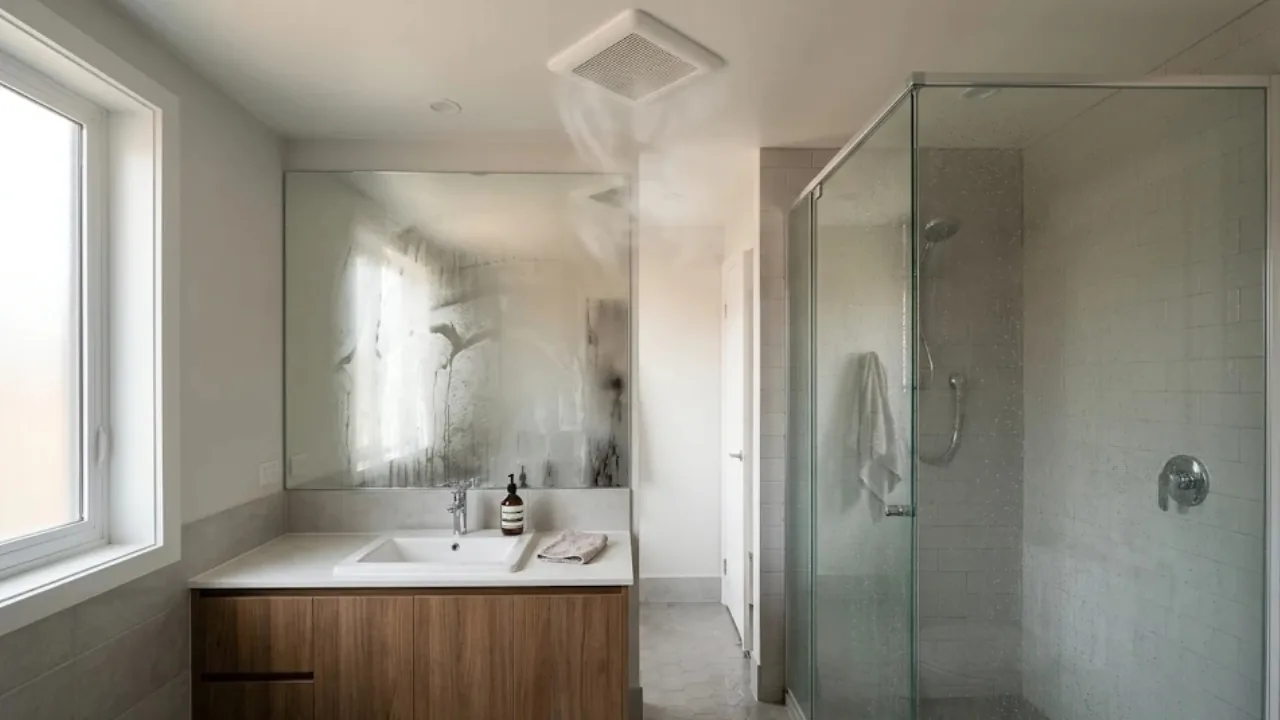
Run a bathroom fan during the shower and for at least 20 minutes afterward as a practical starting point. Then check whether the room’s relative humidity is actually returning near its pre-shower level. Some bathrooms recover in that window; others need longer because of fan airflow, room size, duct restrictions, makeup air, climate, shower duration and wet surfaces.
A timer is useful. A measurement is better. The fan has done its job when moisture is being exhausted outdoors and the bathroom is recovering—not merely when the mirror stops looking dramatic.
How long should you run a bathroom fan after a shower?
The Home Ventilating Institute recommends leaving the fan on for 20 minutes after bathroom use. That is a credible baseline, not a universal finish line. Separate guidance from the US Department of Energy’s Building America Solution Center recommends up to one hour after a shower for effective humidity control. The difference is the point: a fixed runtime cannot describe every bathroom, fan or climate.
Use this practical sequence:
- Turn the exhaust fan on before or as the shower begins.
- Keep it running throughout the shower.
- Leave it on for at least 20 minutes afterward.
- Track relative humidity and temperature from a consistent location.
- If the room remains well above its pre-shower condition, extend the runtime and diagnose airflow, ducting and moisture sources.
Do not set the timer by mirror fog alone. A mirror is a cold surface, not a calibrated humidity sensor. It can clear while tile, grout, towels and the shower enclosure continue releasing moisture.
Watch the bathroom humidity test
The companion Clean Crisp Air video demonstrates why the common 20-minute rule should be checked against the bathroom’s actual humidity-recovery curve:
Watch “How Long Should a Bathroom Fan Run? We Measured the Humidity” directly on YouTube.
Why bathroom-fan runtime varies
Room size and shower moisture load
A compact half-bath and a large bathroom with a long hot shower do not create the same moisture load. Shower duration, water temperature, enclosure design and the amount of wet surface all affect how much water enters the air and how long evaporation continues after the water stops.
Actual airflow—not the number on the box
Bathroom fans are rated in cubic feet per minute, or CFM, under defined test conditions. Installed performance can be lower when a duct is long, crushed, disconnected, undersized or packed with sharp elbows. A restricted exterior termination or dirty grille can add more resistance.
Hearing the motor only proves that the motor runs. It does not prove that the fan delivers its rated airflow or that damp air reaches outdoors. A tissue pulled toward the grille can indicate suction, but it is not a CFM measurement.
Makeup air
Every cubic foot exhausted from the bathroom must be replaced. That replacement air often enters under the door or from an adjacent space. The HVI guidance notes the importance of an undercut bathroom door. A tightly sealed door with almost no clearance can starve the fan and reduce airflow.
Outdoor conditions and temperature
Relative humidity changes with temperature, so record both. The same amount of water vapor can produce a different RH reading as the room warms or cools. Outdoor dew point and whole-home humidity also influence how quickly replacement air helps the bathroom recover.
Wet materials keep releasing moisture
Tile, grout, towels, bath mats and shower walls can remain wet after the room looks clear. Evaporation from those surfaces can slow the final part of the humidity decline. Squeegeeing the enclosure, hanging towels to dry and removing standing water reduce the moisture the fan must handle.
How much CFM does a bathroom fan need?
For intermittent ventilation in bathrooms under 100 square feet, HVI recommends approximately 1 CFM per square foot, with a minimum of 50 CFM. For bathrooms above 100 square feet, HVI uses a fixture-based calculation: 50 CFM each for a toilet, shower and standard bathtub, and 100 CFM for a jetted tub.
These are selection guidelines, not proof of installed airflow. The complete system includes:
- fan capacity and sound rating;
- duct diameter, length and material;
- number and sharpness of bends;
- backdraft damper and exterior termination;
- grille condition;
- the path for replacement air;
- control strategy and how long occupants actually run the fan.
A larger fan cannot fully rescue a poor duct. It may also create more noise or depressurization than expected. For replacement, resizing or duct changes, use the manufacturer’s instructions and local requirements, and involve a qualified professional when the installation is not safely accessible.
A safe bathroom humidity-decay test
A humidity-decay test compares how the room recovers after a normal shower. It is not a laboratory certification, and the goal is not to create condensation or mold for a thumbnail. Stop if water is affecting finishes, electrical equipment or other materials.
1. Place the monitor consistently
Put the humidity monitor in representative room air, away from direct shower spray, the fan grille, an open window, the HVAC supply and the doorway. Follow the device’s operating limits and stabilization instructions. Use the same location for every trial.
Our home air-quality testing guide explains why a stable baseline, consistent placement and contextual notes matter more than one colorful dashboard number.
2. Record the pre-shower baseline
Log relative humidity and temperature for at least 10 minutes before the shower. Record:
- bathroom dimensions;
- fan make, model and rated CFM if known;
- door and window position;
- HVAC operating state;
- outdoor temperature and humidity when available;
- shower duration and approximate temperature setting;
- monitor model and location.
3. Compare controlled trials
If it can be done without creating damaging conditions, compare:
- Fan-off trial: Run one normal shower and monitor the natural rise and recovery. Stop if condensation becomes excessive or materials remain wet.
- Fan-on trial: Repeat the shower conditions as closely as practical, starting the fan before or when the shower begins and leaving it on afterward.
- Timer or humidity-control trial: If available, test the automatic control without changing other major conditions.
One trial can be distorted by weather, a different shower, an HVAC cycle or a changed door position. Repeat the clearest comparison before making a strong conclusion.
4. Track more than the peak
Useful comparison points include:
- pre-shower RH and temperature;
- peak RH;
- RH when the shower ends;
- RH after 20, 30 and 60 minutes;
- time to return within five percentage points of baseline;
- visible condensation and time for wet surfaces to dry.
“Within five percentage points of baseline” is a transparent test rule—not a building code or universal health threshold. If the baseline was already too humid, returning to it does not solve the underlying whole-home moisture problem.
No raw Clean Crisp Air humidity export was supplied with this draft, so this article does not invent a peak, decay time, airflow rate or winning percentage. Add numerical conclusions only after the readings and trial conditions can be checked.
Why the mirror can mislead you
Mirror fog forms when moist air meets glass cold enough for water vapor to condense. The mirror may clear because the glass warms, room air mixes or the surface is wiped—not because every damp material is dry. A cooler mirror may also remain fogged while the room-average humidity is already declining.
Use three signals together:
- the RH and temperature trend;
- visible condensation on cold surfaces;
- whether tile, grout, towels and the enclosure are drying between uses.
The graph provides context. The building materials show whether moisture is lingering. Neither signal alone diagnoses hidden mold or a concealed leak.
What to check if humidity stays high
Confirm the fan exhausts outdoors
The EPA recommends using bathroom exhaust fans to remove moisture outdoors—not into the attic. An attic-terminating or disconnected duct relocates the moisture instead of solving it. Check only safely accessible components; do not enter unsafe attics or climb onto a roof.
Clean the grille and inspect accessible ducting
Dust can restrict the grille and fan body. HVI recommends isolating power at the circuit breaker before cleaning and checking that the switch cannot energize the fan. Its maintenance guidance also recommends inspecting accessible duct connections and confirming that the exterior damper opens when the fan runs.
Do not reach into energized equipment, soak electrical parts or use harsh chemicals. If safe isolation or access is uncertain, hire a qualified technician.
Check the replacement-air path
Compare the humidity response with the ordinary door position and with the door slightly open after the shower, if safe and appropriate. A major improvement can indicate that the closed room lacks an adequate air path. Do not trim doors or alter fire-rated assemblies without understanding the building requirements.
Review the duct design and installed airflow
Long flexible duct, tight bends, a stuck damper and an undersized duct can cut performance. A contractor can measure airflow at the grille or exterior termination using appropriate instruments. That is far more useful than guessing from noise.
Separate shower humidity from leaks
A fan cannot fix a leaking pipe, failed shower pan, roof leak, wet wall cavity or water intrusion. The EPA’s moisture guidance prioritizes finding and correcting water sources. If staining spreads, paint blisters, materials soften or dampness persists when nobody showers, investigate the building problem.
Timer switch vs humidity-sensing control
A countdown timer keeps the fan operating after the user leaves. It is simple, predictable and easy to test. A humidity-sensing control responds automatically, which can help in shared bathrooms where nobody remembers the switch.
Automation does not guarantee good ventilation. A sensor can be poorly located or adjusted, and neither control can overcome a blocked duct or weak fan. Choose controls compatible with the fan and wiring, follow the manufacturer’s instructions and use a qualified electrician where required.
Do you need a dehumidifier in the bathroom?
Start with exhaust because it removes shower moisture near the source. A dehumidifier may help when measured humidity stays high across the home or climate, but it should not replace a working outdoor-vented fan or conceal a leak.
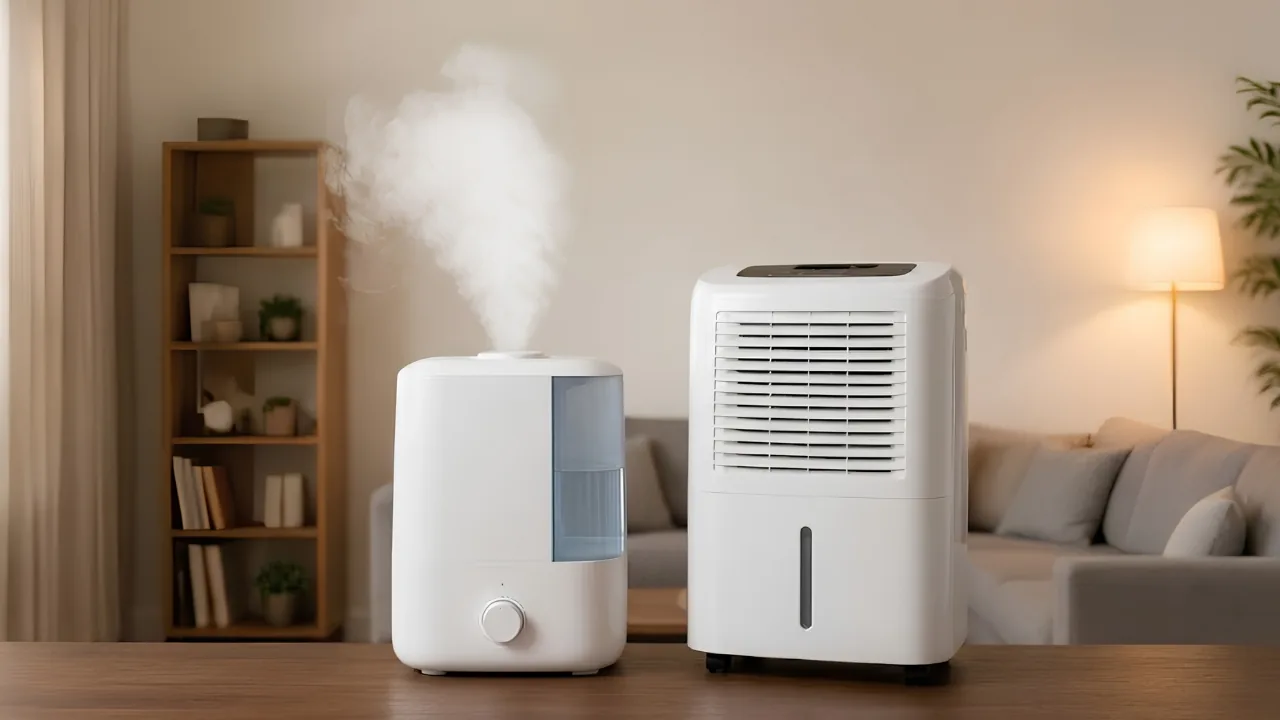
Our guide to using a dehumidifier for condensation explains when airborne moisture is the likely problem and when water entry or a cold surface needs a different fix. For broader equipment choices, see humidifier versus dehumidifier and choosing a dehumidifier for your home.
Keep portable electrical equipment out of wet zones and follow all bathroom-use restrictions. Many household dehumidifiers are not designed to sit beside a shower or bathtub.
Bathroom fan runtime checklist
- Start the fan before or as the shower begins.
- Run it throughout the shower.
- Use 20 minutes afterward as the minimum starting point.
- Record RH and temperature rather than trusting mirror fog.
- Extend runtime if the room does not recover near baseline.
- Check that air is exhausted outdoors.
- Keep the grille clean and accessible ducting intact.
- Provide an appropriate replacement-air path.
- Size the fan to the room, fixtures and installed duct system.
- Investigate leaks or persistent wet materials separately.
Frequently asked questions
Is 20 minutes long enough to run a bathroom fan?
It is HVI’s recommended post-use starting point, but not a guarantee. Measure whether the room returns near its pre-shower humidity and whether surfaces dry. Some bathrooms need a longer runtime.
Should the bathroom fan run during the shower?
Yes. Starting during the moisture-generating event allows the fan to remove humid air before it spreads and condenses. Leaving it on only after the shower misses the strongest source period.
Can I leave the bathroom fan on overnight?
Use the fan according to its manufacturer’s instructions and intended duty cycle. If a normal shower routinely requires hours of operation, investigate airflow, ducting, sizing, controls, whole-home humidity and water sources rather than assuming endless runtime is the fix.
Why is my bathroom still steamy with the fan on?
The fan may be undersized, dirty, restricted by ductwork, starved of replacement air or venting somewhere other than outdoors. A long hot shower and humid outdoor conditions can also slow recovery.
Does a bathroom fan prevent mold?
Effective ventilation helps control the moisture that mold needs, but no fan guarantees prevention. It cannot repair leaks, dry hidden cavities or remove established contamination. The EPA emphasizes moisture control and prompt correction of water problems.
The bottom line
Run the bathroom fan during the shower and for at least 20 minutes afterward. Then let the humidity curve—not a ritual timer—tell you whether the bathroom recovered. If it did not, investigate airflow, ducting, makeup air, sizing and moisture sources before adding random runtime.
Twenty minutes is guidance. Measurement turns it into a decision. Because apparently even bathroom fans deserve performance reviews. 💀
Sources and further reading
- Home Ventilating Institute: Bathroom Ventilation
- Home Ventilating Institute: How Much Ventilation Do I Need?
- Home Ventilating Institute: Care and Maintenance of Your Bathroom Exhaust Fan
- US Department of Energy Building America Solution Center: Bathroom Exhaust Fans
- US EPA: Main Ways to Control Moisture in the Home
- ENERGY STAR: Indoor Air Quality Features
- US EPA: Mold Course—Why and Where Mold Grows

Comments