
Humidifier vs Dehumidifier: Which One Does Your Home Actually Need?
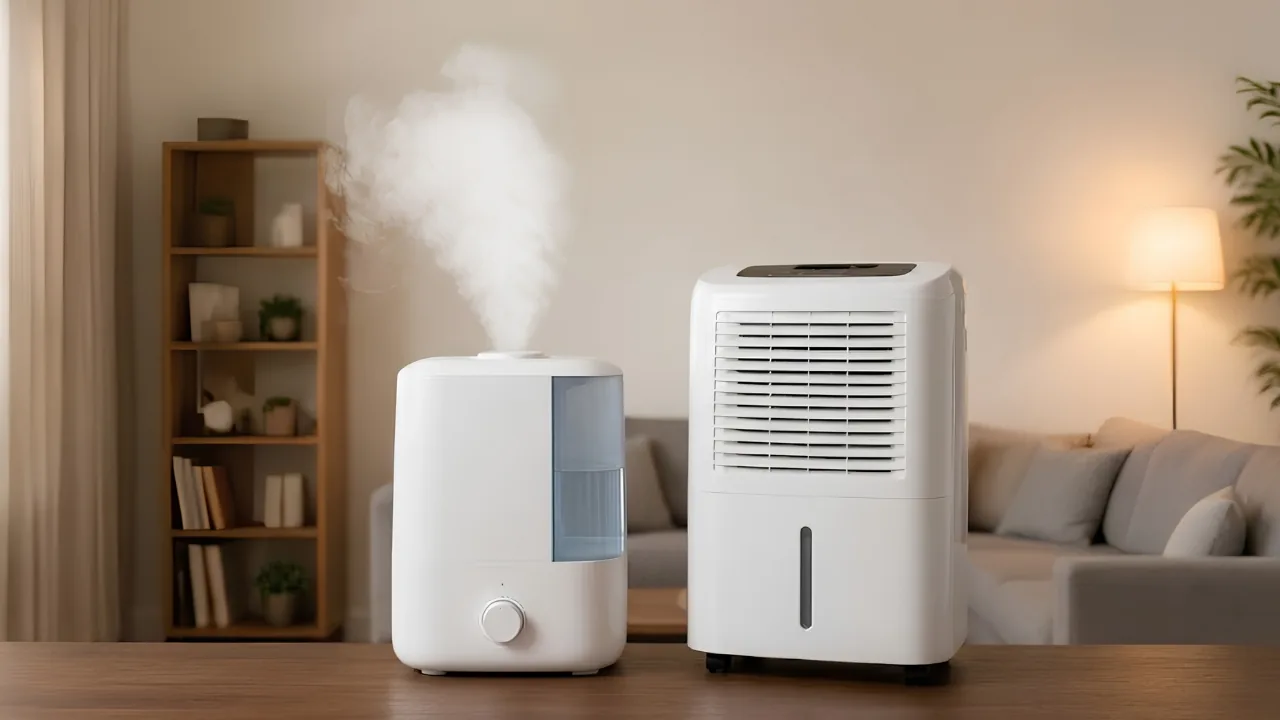
Humidifier vs dehumidifier: a humidifier adds moisture to dry indoor air, while a dehumidifier removes moisture from damp air. They solve opposite problems. The right choice starts with a hygrometer—not dry skin, a musty smell, or whatever appliance happens to be on sale.
Measure relative humidity and temperature in several rooms for at least 48 hours. If readings remain low, careful humidification may help. If they remain high, investigate moisture sources first and consider ventilation or dehumidification. If readings stay in a reasonable range, you may need neither device.
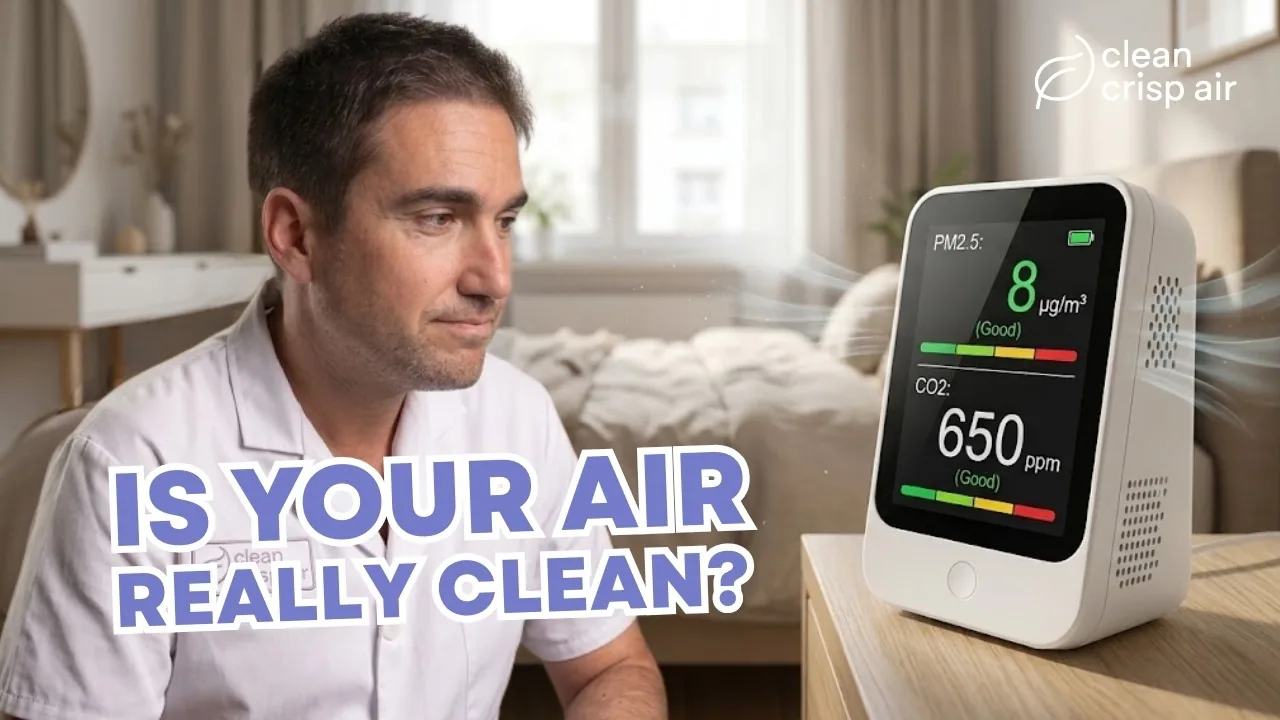
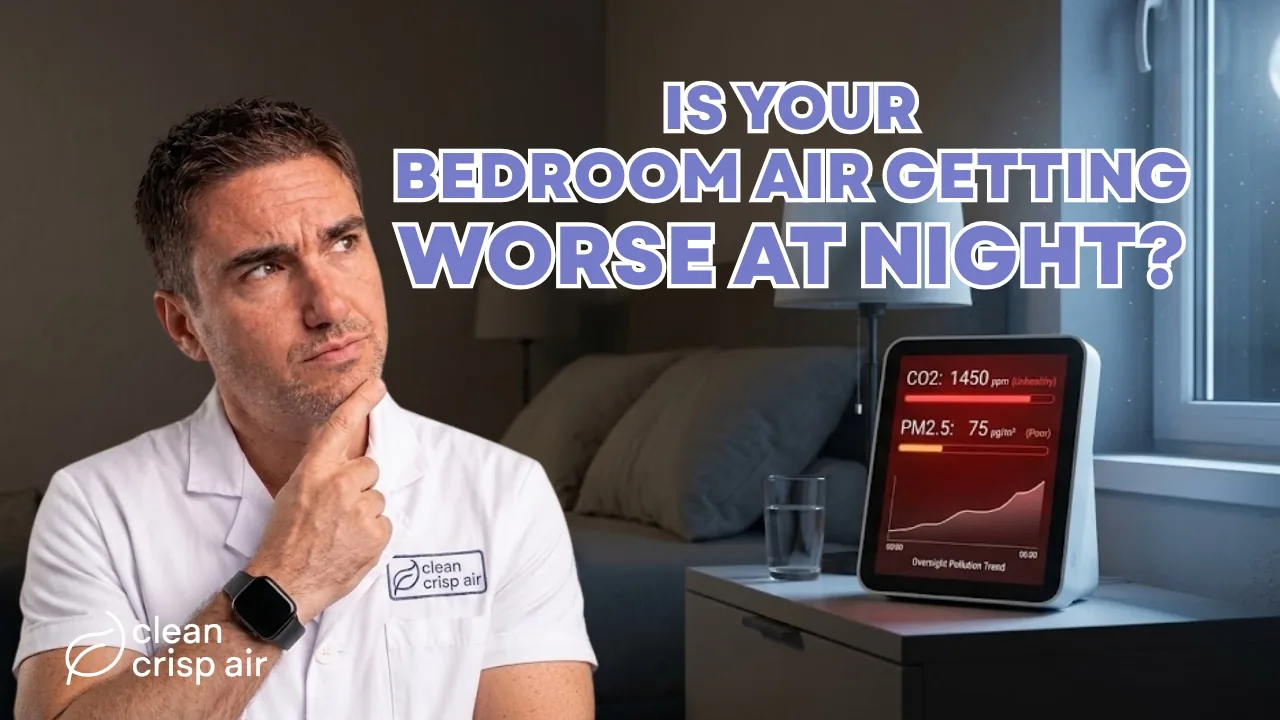
Prefer to watch? See the Clean Crisp Air explainer below, or watch Humidifier vs Dehumidifier: Measure Before You Buy on YouTube.
Humidifier vs dehumidifier: the short answer
- Use a humidifier when repeated measurements show the air is too dry and there is no condensation or moisture problem.
- Use a dehumidifier when repeated measurements show excess airborne moisture after leaks, drainage, and ventilation problems have been addressed.
- Use neither when humidity is already controlled. An appliance should respond to a measured problem, not create a new one.
The US Environmental Protection Agency’s moisture guidance says indoor relative humidity should stay below 60% and ideally between 30% and 50% where practical. Its separate home-humidifier guidance advises not humidifying above 50%. These figures are useful boundaries, not a promise that one universal number fits every climate, season, building, or cold surface.
In a cold climate, condensation may appear on windows before the room reaches 50% RH. In a warm, humid climate, outdoor moisture may keep entering through air leakage. Sensor accuracy and placement matter too. Look at the trend, the building, and visible moisture—not one isolated number.
What relative humidity actually tells you
Relative humidity, or RH, compares the water vapor currently in the air with the maximum amount the air could hold at that temperature. Because warmer air can hold more water vapor, RH can change when temperature changes even if no water is added or removed.
That is why temperature and RH should always be recorded together. A room warming through the afternoon may show a lower RH reading without a dehumidifier removing anything. A cold window can collect condensation even when the room-average reading looks acceptable because the air beside the glass is colder.
A basic digital hygrometer is enough for household trend tracking. It is not laboratory equipment, but it is far more useful than guessing. If you want a broader monitoring method, use our guide to testing indoor air quality at home and interpreting consumer sensors.
When should you use a humidifier?
A humidifier may be appropriate when repeated readings show low indoor humidity, often during the heating season when cold outdoor air is warmed indoors. The appliance adds water vapor; it does not remove particles, ventilate the room, cool the air, or identify why someone has respiratory symptoms.
Signs that support checking for low humidity
- repeated hygrometer readings below the target chosen for your climate and building;
- static electricity and materials drying or shrinking during winter;
- dry-feeling air that coincides with low readings rather than replacing measurement;
- no window condensation, damp surfaces, leak, or visible moisture problem.
Physical discomfort can have many causes, so symptoms alone do not prove that a humidifier is needed. Avoid turning a comfort observation into a medical diagnosis. If symptoms are persistent or severe, seek qualified medical guidance.
Humidifier care is not optional
A neglected humidifier can become part of the air-quality problem. The EPA notes that ultrasonic and impeller units can disperse minerals and microorganisms from their tanks. Its recommendations include emptying and drying portable tanks daily, using low-mineral water, cleaning portable units every third day, and following the manufacturer’s instructions.
Reduce output if windows or nearby materials become damp. Keep steam vaporizers away from children because hot water and steam can burn. If humidifier use appears to coincide with respiratory symptoms, stop using it and follow the EPA’s advice to contact a physician.
When should you use a dehumidifier?
A dehumidifier may be useful when indoor RH stays elevated, condensation appears, or a room remains damp after obvious moisture sources have been controlled. It removes water from the air, but it cannot repair a leaking pipe, failed roof, foundation seepage, missing insulation, or contaminated water damage.
Signs that support checking for excess humidity
- repeated elevated RH readings in representative room air;
- condensation on windows, pipes, or other cold surfaces;
- a damp or musty room that also has measurable excess humidity;
- slow-drying laundry or materials in a poorly ventilated space;
- moisture loads from showers, cooking, an unvented dryer, or humid outdoor air.
Trace the source before shopping. Our guide to using a dehumidifier for condensation separates excess airborne moisture from leaks and cold-surface problems. If a machine is justified, choose dehumidifier capacity for the room size, dampness, temperature, and drainage plan.
ENERGY STAR’s dehumidifier guidance says capacity should match both the space and its condition before dehumidification. It also notes that a dehumidifier slightly warms the surrounding space. If temperature—not moisture—is the main problem, read our explanation of why a dehumidifier does not cool a room like an air conditioner.
How to tell which one your home needs: a 48-hour test
Do not run a humidifier and dehumidifier against each other. That produces electricity bills, not insight. Start with a baseline, identify the room and time pattern, then test only the intervention the readings justify.
What you need
- one reliable temperature-and-humidity meter, or several comparable meters;
- a notes app or simple spreadsheet;
- the outdoor weather and humidity for context;
- room names, approximate dimensions, occupancy, and HVAC schedule;
- notes on showers, cooking, indoor laundry, open windows, and unusual weather.
Where to place the hygrometer
Place the sensor in representative room air with clear airflow around it. Keep it away from supply vents, open windows, direct sunlight, exterior walls, showers, cooking steam, and the outlet or mist plume of either appliance. If you use one sensor for three rooms, allow it to stabilize after each move and use the same locations at each check.
The 48-hour measurement schedule
- Choose the bedroom, main living area, and the room you suspect is driest or dampest.
- Record temperature and RH in each room in the morning, afternoon, and before bed.
- Keep normal routines rather than staging extreme conditions.
- Note weather, HVAC cycles, occupancy, cooking, showers, laundry, and open doors or windows.
- Repeat the schedule on day two and look for a pattern rather than one spike.
- If the pattern justifies intervention, test only the appropriate device while holding other conditions as consistent as practical.
- Record settings, runtime, water added or collected, temperature, RH, condensation, and every interruption.
This protocol is a practical household comparison, not a laboratory study. No measured 48-hour dataset was supplied with this draft, so the article does not invent results. Add the real chart and observations when production provides the raw readings.
How to interpret your readings
- Consistently low readings: verify sensor placement and accuracy, then consider cautious humidification while watching for condensation.
- Consistently high readings: inspect for leaks and moisture sources, improve source exhaust or ventilation where appropriate, and consider dehumidification if excess airborne moisture remains.
- Large room-to-room differences: investigate local sources, cold surfaces, airflow, and whether one room is isolated from the HVAC system.
- Normal room average but wet windows: the surface may be cold enough for local condensation; lowering indoor moisture, improving insulation, or addressing air leakage may be necessary.
- Readings that change only beside the appliance: move the sensor. Local mist or warm exhaust is not representative of the whole room.
Verify the result after any change. If a humidifier raises RH but creates condensation, reduce output or stop. If a dehumidifier runs constantly without controlling the room, check capacity, airflow, temperature, drainage, doors and windows, and ongoing moisture entry. Factor runtime and electricity into the decision using our dehumidifier running-cost guide.
Humidifier or dehumidifier for allergies and mold?
Humidity control can be one part of a healthier building, but neither appliance should be sold as a cure. A humidifier does not remove allergens. A dehumidifier may help control conditions that support moisture-related growth, but it does not remove established mold or repair the water source.
The EPA says moisture control is central to mold control. When materials are wet, the priority is to stop the water, dry affected materials promptly, and assess the extent and contamination. Significant mold, structural damage, sewage, floodwater, or hidden moisture warrants qualified help.
An air purifier solves a different problem by filtering certain airborne particles or gases, depending on its design. See our air purifier versus humidifier comparison before expecting moisture equipment to perform filtration.
Can you use a humidifier and dehumidifier in the same home?
Yes, different rooms or seasons can have different needs. A basement may require moisture removal while an upstairs bedroom becomes dry during winter heating. Measure each zone rather than using one whole-house assumption.
Running both portable devices in the same open room at the same time is normally counterproductive: one adds water while the other removes it. If a building needs coordinated whole-home humidification and dehumidification at different times, the controls and HVAC integration should be designed so the systems do not fight each other.
Humidifier, dehumidifier, air purifier, or air conditioner?
- Humidifier: adds moisture when indoor air is measurably too dry.
- Dehumidifier: removes airborne moisture when humidity is measurably too high.
- Air purifier: filters specified airborne particles or gases; it does not control RH or remove CO2.
- Air conditioner: removes heat and may also remove moisture while cooling.
- Ventilation: exchanges indoor air with outdoor air; its effect on humidity depends on outdoor conditions.
No single machine fixes every indoor-air problem. Match the intervention to the measurement: filtration for particles, ventilation for accumulated CO2 and some indoor gases when outdoor conditions allow, moisture control for humidity, and dedicated alarms or tests for carbon monoxide and radon.
Frequently asked questions
Should I use a humidifier or dehumidifier in winter?
Measure first. Heating often lowers indoor RH, but cold windows and poorly insulated surfaces can still develop condensation. Use the lowest humidifier setting that addresses measured dryness without wetting surfaces. If winter readings are elevated instead, use our guide to reducing indoor humidity in winter to investigate ventilation, condensation, and moisture sources.
Should I use a humidifier or dehumidifier in summer?
Warm, humid weather often increases the need for cooling or dehumidification, but climate and building operation matter. If indoor RH is already controlled, adding another appliance may only increase energy use.
Can a dehumidifier kill mold?
No. Lowering humidity may help prevent conditions that support further growth, but a dehumidifier does not remove established mold, contaminated material, or the moisture source.
Can a humidifier make mold worse?
Excess humidification can create damp conditions that support biological growth. Follow the EPA guidance, monitor RH, reduce output if condensation appears, and keep the unit clean.
Do I need an expensive hygrometer?
For household trend tracking, a basic digital model can be useful. Compare it with another unit if a decision depends on a borderline reading, and record its stated accuracy. Consistent placement and repeated readings matter more than dashboard theatrics.
The bottom line
Choose between a humidifier and dehumidifier by measuring the room, not diagnosing it by vibe. A humidifier adds moisture. A dehumidifier removes it. Track temperature and RH across several rooms for 48 hours, investigate the cause, test one justified intervention, and verify that conditions moved in the intended direction.
If the problem is a leak, active mold, contaminated water, combustion hazard, or persistent health concern, stop treating it as an appliance-shopping question and use qualified help.
Comments