
Fanimation ceiling fan troubleshooting: remote and fan faults
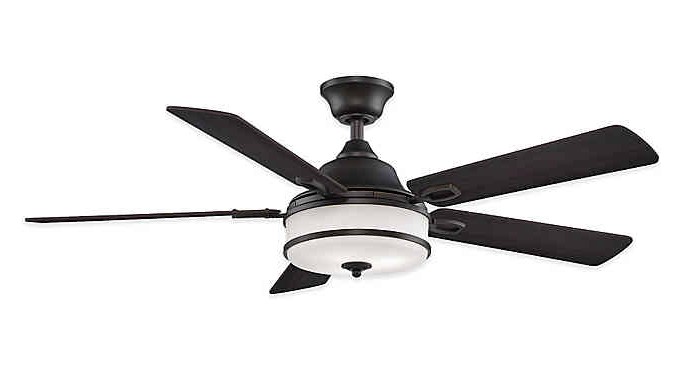
Quick Answer: Most Fanimation faults are the remote or its receiver, not the motor. Kill power at the breaker for 30 seconds and restore it, then fit fresh batteries, then check that the dip switches in the remote match the ones on the receiver in the fan canopy. That sequence fixes the majority of no-response, will-not-turn-off and turns-on-by-itself complaints. Anything that survives it is usually a receiver or capacitor.
A Fanimation fan that has stopped responding is far more likely to have a radio problem than a mechanical one. The order below is deliberate: it goes cheapest and safest first, and only reaches inside the canopy once the free checks are done. If you are looking for how to use the remote rather than how to fix it, see our guide to operating a Fanimation remote control.
Which fault do you have?
| Symptom | Most likely cause | Try first |
|---|---|---|
| Nothing responds at all | Power, or a dead remote | Breaker, wall switch, then batteries |
| Light works, fan does not | Receiver or motor | Power-cycle, then spin a blade by hand |
| Fan works, light does not | Bulbs or the light circuit | Bulbs, then the light channel on the remote |
| Turns on or off by itself | Dip switch clash with a neighbouring fan or garage door | Change the dip switch code on both receiver and remote |
| Will not turn off | Receiver stuck, or a failed wall switch | Breaker test to tell the two apart |
| Spins but moves no air | Reverse mode, or mounting height | Check the direction switch |
| Only one speed works | Receiver or capacitor | Re-pair first, then treat as a parts fault |
Before anything else: power-cycle and batteries
Turn the fan off at the breaker, wait 30 seconds, and turn it back on. This clears a receiver that has locked up, and it is the single most effective step on this page. Then fit new batteries rather than testing the old ones, because a remote can have enough charge to light its own display and not enough to transmit.
One correction worth making, because this page used to give the wrong advice: do not bother pointing the remote at a phone camera. That test detects infrared, and ceiling fan remotes that pair by dip switch are radio frequency. An RF remote will show nothing on a camera whether it works or not.
How do you re-pair a Fanimation remote?
Fanimation's pairing is a dip switch code shared between the handset and the receiver in the fan canopy. Both sets have to read the same, and Fanimation's own support guidance for a fan behaving unpredictably is to change "the dipswitch settings on your fan's receiver unit and corresponding remote control."
- Turn the power off at the breaker. Not the wall switch. Leave it off until the canopy is back together.
- Lower the canopy cover and find the receiver. The dip switches are a small bank of sliding tabs.
- Open the remote's battery compartment and find the matching bank.
- Set both to the same pattern, and choose a pattern you have not used before if the fan has been triggering on its own.
- Reassemble, restore power, and test.
Procedures differ across the range. Fanimation publishes separate AC and DC remote guides, and fanSync WiFi models are a different system entirely. Current spec sheets and owner's manuals sit under the Support Documents tab on each fan's own product page on Fanimation's support site, so work from the document for your model number rather than a generic sequence.
The fan will not run but the light works
Power is reaching the fixture, so the fault is downstream of it. With the breaker off:
- Spin a blade by hand. If it binds or grinds, the motor or bearings are the problem, not the electronics.
- Check the canopy connections are tight. Wire colors and what each one does are covered in our ceiling fan wire color guide.
- Look for dust packed around the motor shaft and clear it.
A fan that spins freely by hand, has tight connections and still will not run on any speed is usually a failed receiver or a tired starting capacitor. Both are parts, not adjustments.
The light will not work but the fan does
Start with bulbs, including checking the wattage and type against the fixture's rating, then the light channel on the remote. If the light never worked after installation, the cause is often wiring rather than the fixture, and our guide to a ceiling fan light that will not work covers the switch-leg cases.
The fan turns on by itself, or will not turn off
A fan operating on its own is almost always a code clash: a neighbour's fan, a garage door opener or another RF device sharing your dip switch pattern. Change the code on both receiver and remote. We cover this in more detail in our guide to a Fanimation fan that turns on by itself.
For a fan that will not switch off, the breaker tells you where the fault is. Trip the breaker: if the fan stops, the motor and wiring are fine and you have a stuck receiver or a failed wall switch. Our guide to troubleshooting a ceiling fan wall switch separates those two.
The fan spins but you feel no air
- Direction. In reverse the fan pulls air up and you feel very little at floor level. This is the most common answer by a distance, and it usually traces to someone flipping the switch for winter. See which way a ceiling fan should turn.
- Mounting height and clearance. A fan mounted too close to the ceiling, or in a room far larger than its blade span, moves air it cannot push down to you.
- Speed. Obvious, but worth ruling out before opening anything.
If the direction is right and the fan is well sited, a blade pitch that has shifted or a weakening capacitor will both produce a fan that turns without shifting air. That is a service call.
Only some speeds work
Re-pair the remote and receiver first, because a partial code match can produce exactly this. If every speed is still not available after that, the usual causes are the receiver or the capacitor, and neither is a user-serviceable part on most models. Our guide on a ceiling fan slowing down covers the overlapping symptoms.
When to stop and call someone
Stop and get help when you find scorching, a burning smell, discoloured wire insulation, a fan that trips the breaker, or a motor housing that is hot to the touch. Those are electrical faults, not settings.
If the fan is still in warranty, contact Fanimation before opening anything, because a self-repair can end the cover. Fanimation's technical support is on 888-567-2055 and [email protected], and warranty terms sit on each product's own page rather than a single site-wide page.
For anything that needs work inside the ceiling box rather than the canopy, use an electrician.
Frequently asked questions
How do I reset a Fanimation ceiling fan?
Switch the fan off at the circuit breaker, wait 30 seconds, and switch it back on. That power-cycle resets the receiver and is the first thing to try for a fan that has stopped responding.
Why is my Fanimation remote not working?
In order of likelihood: flat batteries, a receiver that needs a power-cycle, or dip switches that no longer match between the handset and the receiver. Work through those three before assuming the handset has failed.
Where is the learn or pairing button on a Fanimation fan?
Most Fanimation fans pair by matching a dip switch code between the remote and the canopy receiver rather than by a learn button. Some newer and fanSync WiFi models differ, so check the owner's manual for your model number on Fanimation's support site.
Can I test my fan remote with a phone camera?
No, not for a dip switch remote. That test only shows infrared, and these remotes are radio frequency. A working RF remote looks exactly the same as a dead one through a camera.
Why does my ceiling fan turn on by itself?
Another RF device nearby is transmitting on the same dip switch code. Change the code on both the receiver and the remote to a pattern you have not used before.
Can I use a universal remote with a Fanimation fan?
Sometimes, but it depends on the receiver in your fan and whether it is AC or DC. Match the replacement to your model number using the support documents on the product page rather than buying a generic handset and hoping.
Is a ceiling fan capacitor something I can replace myself?
On most models it is not a user-serviceable part, and it sits inside the motor housing on a circuit that has been live. If the fan is out of warranty and you are confident, it is a known repair, but it is a reasonable point to bring in an electrician.
Comments