
How to Use Volcanic Rocks for Odor Removal
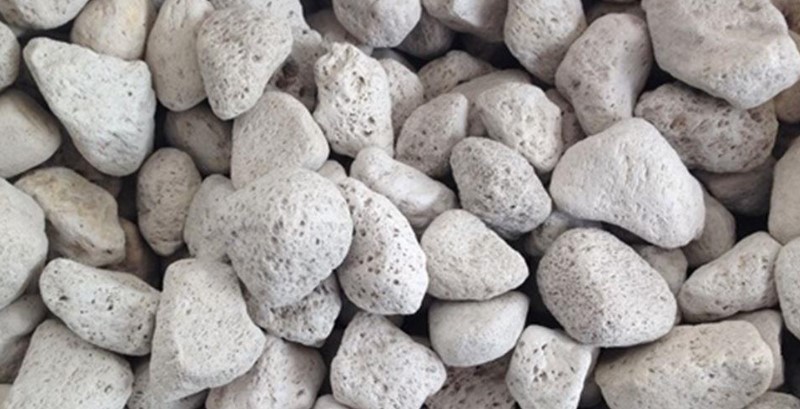
Quick Answer: Volcanic rock odor products are sold either as natural zeolite, a mineral mined from altered volcanic ash, or simply as "volcanic minerals." Zeolite can trap some odor molecules and is used commercially for odor control and pet litter. Put the bag close to the smell in an enclosed space and give it several days. It will not clear a whole room, and the claim that it works like an ozone generator is wrong.
These bags are a reasonable, fragrance-free option for a closet, a car or the area around a litter box. They are not magic, and much of what is written about them, including on an earlier version of this page, overstates how they work. This guide covers what the rocks are, what they can and cannot remove, and how to use them. For a comparison with carbon, see our guide to whether charcoal absorbs odors.
What are "volcanic rocks" for odor removal?
The ones with a documented odor use are zeolites. Zeolites are crystalline minerals that form when volcanic ash and tuff are altered over geological time. They are not rare traces inside lava. According to the USGS Mineral Commodity Summaries 2026, seven US mines produced an estimated 80,000 tons of natural zeolites in 2025, mostly clinoptilolite and chabazite. Odor control accounted for 15% of US sales by tonnage, and pet litter is another listed use.
Read the label. Some products say zeolite. Others only say "volcanic minerals" or "volcanic rocks." Garden lava rock and pumice are porous volcanic rocks too, but they are not sold as adsorbents, and we found no testing of them for household odors.
| Material | What it is | Evidence for odor use |
|---|---|---|
| Natural zeolite (clinoptilolite, chabazite) | Crystalline mineral mined from altered volcanic tuff | Used commercially for odor control and pet litter (USGS) |
| Lava rock or pumice | Porous volcanic rock | None found for household odors |
| Activated carbon | Carbon processed to have a very large internal surface | Standard material in odor and gas filters (EPA) |
How does zeolite actually absorb odors?
Two ways. First, its crystal structure has cavities and channels. A 1982 USGS report on zeolitic tuffs explains that once water is driven out of those cavities, gas molecules small enough to pass through the channels are readily adsorbed. Only molecules that fit get in. The report describes those cavities as normally occupied by water molecules, so damp zeolite has less room for gases.
Second, zeolite holds loosely bound positive ions that it can swap for others. The USGS report says clinoptilolite has a high selectivity for ammonium, the form ammonia takes in urine and wastewater. That is the real basis for zeolite in pet litter and livestock areas.
Is the "negative charge attracts odors" claim true?
Not as sellers usually put it. The ion exchange above is real, but it is a swap of charged ions, not a magnet pulling smells across a room. Most household odor molecules are not charged at all. The rock works on the air that drifts past it.
It is also nothing like an ozone generator, as an earlier version of this page claimed. Ozone is a reactive gas that is added to the air. The EPA says ozone is a lung irritant and that, at concentrations that do not exceed public health standards, it is not effective at removing many odor-causing chemicals. Zeolite adds nothing to the air.
How do you use volcanic rocks or zeolite for odors?
- Find and remove the source first: the soiled litter, the spill, the damp towel.
- Leave the rocks in their mesh bag. Do not open it.
- Place the bag as close to the smell as you can, in the most enclosed space you can, such as a closet, cabinet, car or litter box area.
- Give it several days. Passive products only work on the air that reaches them.
- For loose granules, pour gently to keep dust down, and vacuum them up once the smell fades.
Coverage claims on the bag are the maker's own. The EPA notes there are no widely used performance rating systems for products that remove gases.
Does sunlight recharge the rocks?
Partly, at best. Sellers often say direct sunlight renews the rocks. Sunlight can dry the surface. But to fully clear the water from zeolite before testing, the USGS researchers heated their samples to 450°C (842°F) under vacuum for 16 hours. A sunny porch is nowhere near that. We found no testing of how much capacity sunlight restores. Recharge if you like, and replace the bag when the smell comes back.
When will volcanic rocks not help?
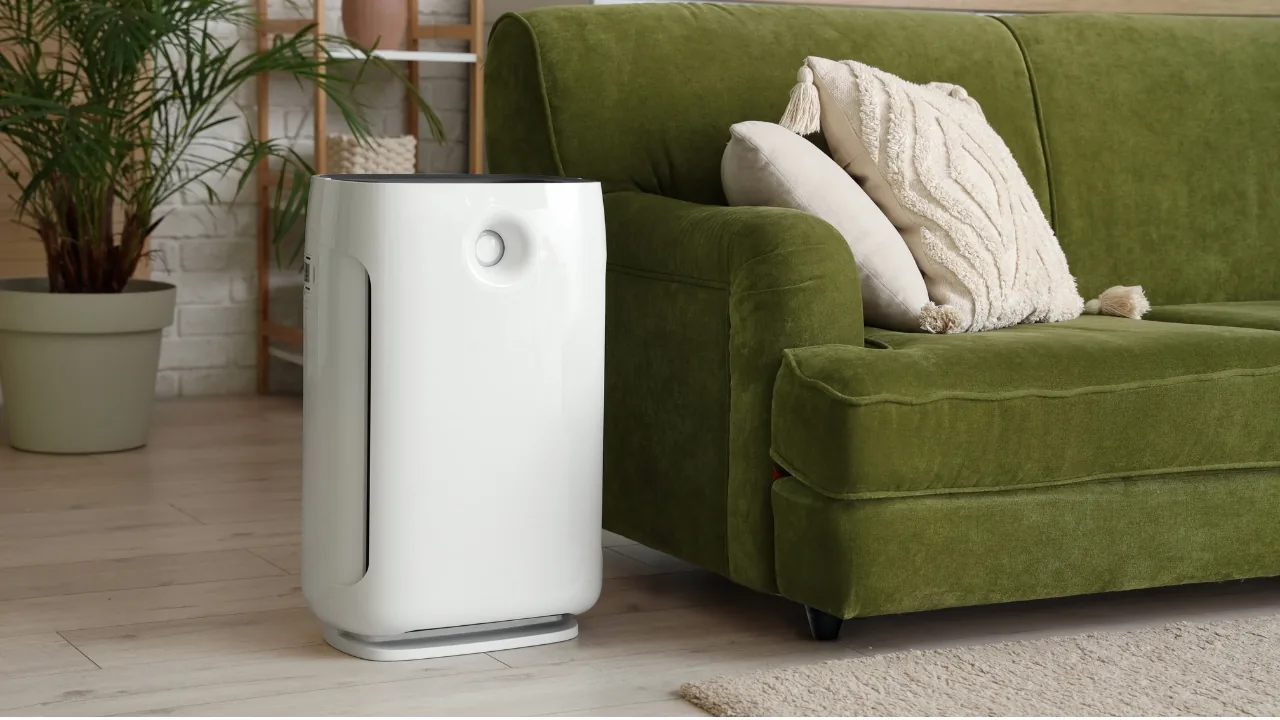
- A whole room or house. Use ventilation and a portable air cleaner with a thick activated carbon filter.
- Musty or damp smells. The cause is moisture. The EPA advises fixing the water problem and keeping indoor humidity below 60%.
- A rotten egg smell. This can be a natural gas leak. PHMSA says to leave the area and call 911 from somewhere well away from it, and not to create any flame or use switches on the way out.
For basements in particular, our basement odor guide covers the moisture side.
Frequently asked questions
Do volcanic rocks really absorb odors?
Zeolite-based products can trap some odor molecules, especially ammonia from urine. They work slowly and only on nearby air in enclosed spaces.
Are volcanic rocks the same as zeolite?
Not always. Zeolite is a mineral formed from altered volcanic ash. Many odor products contain it, but plain lava rock and pumice are different materials. Check the label.
How long do volcanic odor rocks last?
It depends on how strong the odor is and how damp the air is. We found no independent lifespan data. Replace the bag when it stops helping.
Are volcanic rocks better than activated charcoal?
They are suited to different jobs. Zeolite is notably selective for ammonium, the form of ammonia in urine. Activated carbon holds a wider range of organic odor molecules. Both are passive and work best in small enclosed spaces.
Are volcanic odor rocks safe around pets and children?
They release no fragrance, which is their main appeal. Keep the bag closed and out of reach so it is not chewed or emptied.
Can I use volcanic rocks in my car?
Yes. A car is a small enclosed space, which suits passive odor absorbers. Remove the source of the smell first.
Comments