
How to get rid of crawl space odors permanently
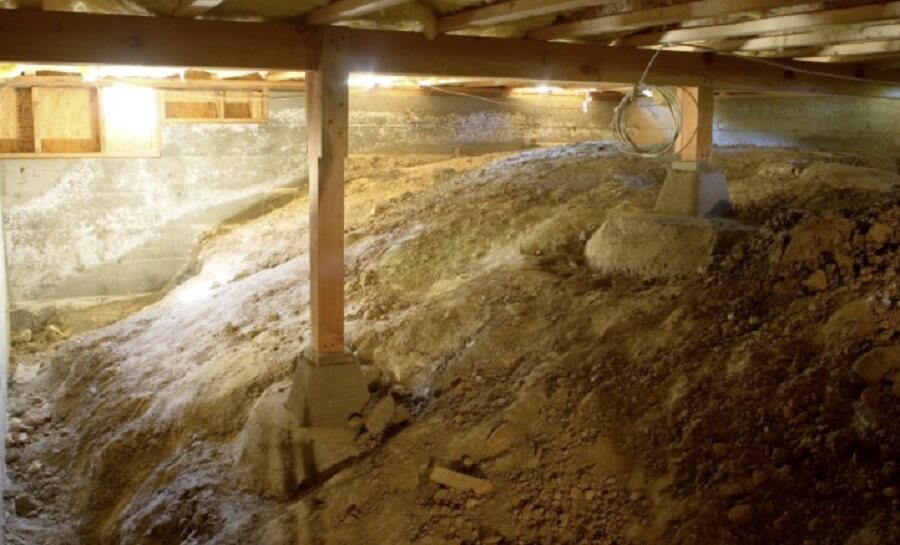
Quick Answer: A musty crawl space is a moisture problem wearing an odor disguise. Find where water is getting in, dry the space out, and hold relative humidity between 30 and 50 percent with a dehumidifier and a sealed ground cover. The smell goes when the moisture goes. Ozone generators, mothballs and deodorizer bombs do not fix it, and two of those three carry real health risks.
The smell rising into your house through the floor is almost never coming from something you can spray. It is coming from damp: wet soil, a leak, condensation on cold pipes, or humid summer air hitting a cool surface and condensing. Treat the damp and the odor leaves. Treat the odor and it comes back every season. This guide covers how to find the source, what actually works, and why two of the most commonly recommended fixes are ones we no longer suggest.
Why does a crawl space smell musty?
That smell is microbial. Mold and bacteria growing on damp wood, insulation, cardboard and soil give off gases as they feed, and a crawl space is the ideal place for it: dark, still, cool, and usually sitting on bare earth.
The EPA's position on this is blunt. "Indoor mold growth can and should be prevented or controlled by controlling moisture indoors," and "if you clean up the mold, but don't fix the water problem, then, most likely, the mold problem will come back," according to the EPA's brief guide to mold, moisture and your home. EPA's target is to keep indoor humidity below 60 percent, ideally between 30 and 50 percent.
There is also a timing rule worth knowing before you start. Per the same guide, "if wet or damp materials or areas are dried 24-48 hours after a leak or spill happens, in most cases mold will not grow." Past that window you are no longer preventing a problem, you are remediating one.
Find the source before you treat the smell
Take a bright light and a humidity meter down there. If you do not own one, our guide to spotting high humidity without a hygrometer will get you started, but a meter makes the decision for you rather than with you.
Work through these in order:
- Standing water or damp soil. The most common cause and the most fixable. Look after rain, not during a dry week.
- Plumbing. Drips, sweating cold-water lines, a leaking waste pipe. A sewage smell rather than a musty one points here.
- Grading and gutters. Ground sloping toward the house, or downspouts discharging at the foundation, put water where it will find a way in.
- Condensation. Humid outside air entering through vents in summer and condensing on cool surfaces. Counterintuitively, opening the vents can make a crawl space wetter in a humid climate.
- A dryer vent terminating in the crawl space. Rare, illegal, and it dumps litres of water vapor per load.
- Dead animals or rodent waste. A sharp, foul smell rather than an earthy one. This is the one case where the smell is the source.
What actually fixes a crawl space odor?
| Action | What it addresses | When it is the right move |
|---|---|---|
| Repair the leak, grading or gutters | Water entering the space | Always first. Nothing below works for long without it |
| Sealed ground cover over bare soil | Ground moisture evaporating upward | Any crawl space with an exposed earth floor |
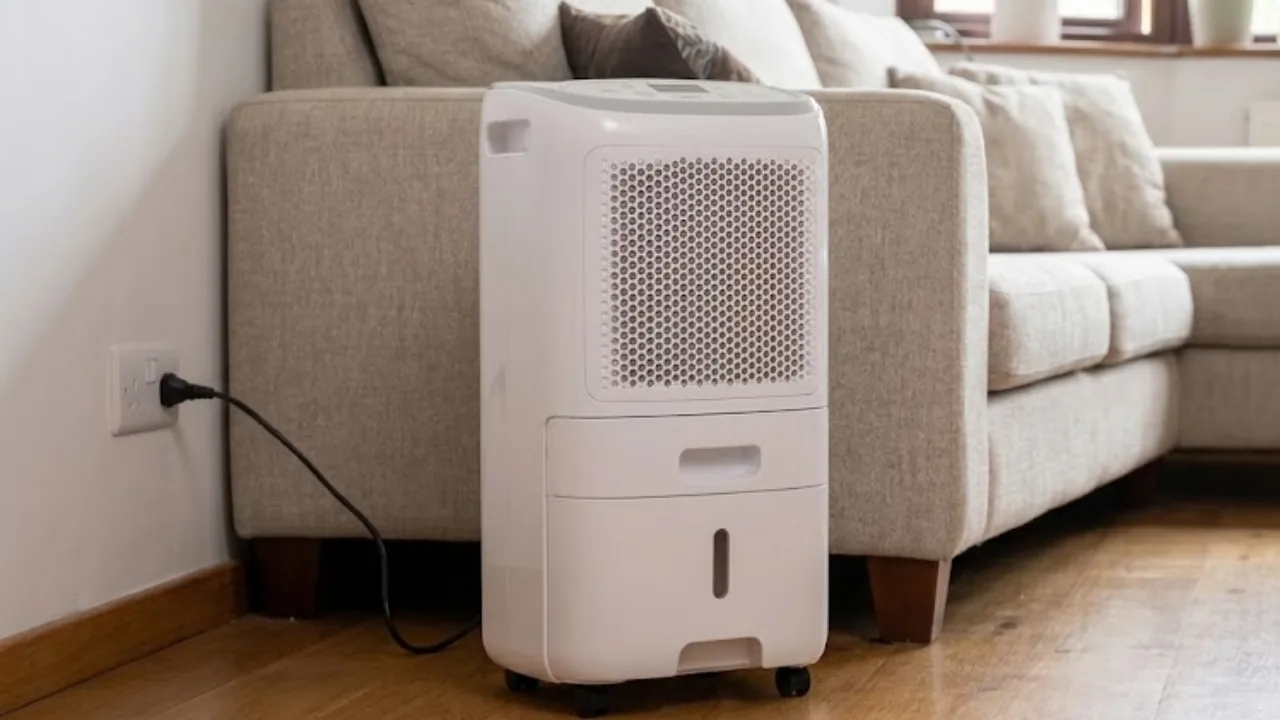
| Dehumidifier sized for the space | Humidity that remains after the water is fixed | Once the space is dry and sealed, to hold 30 to 50 percent |
| Remove wet insulation, cardboard and debris | The material the mold is growing on | When insulation is sagging, stained or damp to the touch |
| Air sealing between crawl space and living space | Air carrying the smell upstairs | When the smell reaches the house but the space is being dried |
On the dehumidifier: place it so air can circulate rather than in a corner, and expect it to run hard at first. Our guides on where to put a dehumidifier in a basement and what one costs to run apply to a crawl space too. If yours ices up in a cool crawl space, that is a known failure mode covered in our dehumidifier freeze-up guide.
Should you use an ozone generator?
No, and we have removed the recommendation that used to be on this page.
The EPA's review of ozone generators sold as air cleaners is direct: "Available scientific evidence shows that at concentrations that do not exceed public health standards, ozone has little potential to remove indoor air contaminants." On odors in particular, "at concentrations that do not exceed public health standards, ozone is not effective at removing many odor-causing chemicals," and where it seems to work it is masking rather than removing, as with body odor which "may be masked by the smell of ozone but is not removed by ozone."
The health side is worse. EPA lists chest pain, coughing, shortness of breath and throat irritation, and notes ozone can worsen asthma. And the dose is not reliably controllable: "results of some controlled studies show that concentrations of ozone considerably higher than these standards are possible even when a user follows the manufacturer's operating instructions."
A crawl space also shares air with the house above it, so ozone generated down there does not stay down there. If you already own one, our guide on clearing ozone out of a home covers airing out afterward.
What about mothballs?
No, and this recommendation has been removed too. Mothballs are a pesticide, not a deodorizer. They are nearly pure naphthalene or paradichlorobenzene, and they work by filling a sealed space with toxic vapor.
The National Pesticide Information Center is explicit about the legal position: "The label of any pesticide, including mothballs, specifies exactly where and how you can legally use the product." Labels "typically direct users to place mothballs in a tightly closed container that will prevent the pesticide fumes from accumulating in living spaces where people and pets can breathe them in for long periods of time." And: "Using mothballs in a way not specified by the label is not only illegal, but can harm people, pets or the environment."
Scattering them across a crawl space floor is not a use any mothball label describes, and the vapor rises into the house.
What about deodorizer bombs, foggers and odor-absorbing rocks?
These are not dangerous in the way the two above are, but they do not solve anything. A fogger deposits fragrance or a disinfectant mist that dissipates in days while the damp wood stays damp. Absorbent rocks and crystals take up a small amount of airborne moisture and odor in a space that is producing both continuously.
They have one honest use: masking a smell for a short, known period, such as a showing or a family visit, while the real repair is scheduled. Sold as a permanent fix, they are not one.
Does vinegar or baking soda work?
For wiping down a specific mildewed surface, vinegar is a reasonable cleaner. Baking soda does absorb some moisture, which is why it works in a closet or a fridge. Neither will dry out a crawl space, because the volume of water involved is orders of magnitude larger than a bowl of powder can hold. Use them on surfaces, not as the strategy.
When should you call a professional?
Bring someone in when you find standing water that returns, sewage odor, mold across a large area, structural wood that is soft or stained, or when the crawl space is too tight to work in safely. EPA's guidance for extensive water damage and significant mold is that it needs qualified help, and crawl spaces add confined-space, asbestos and vermiculite risks in older homes.
Encapsulation, meaning a sealed liner up the walls plus conditioned air or a dedicated dehumidifier, is a contractor job and the right answer for a persistently wet crawl space. Get the water fixed first, or you are sealing a liner over the problem.
Frequently asked questions
Is it normal for a crawl space to smell musty?
It is common, but it is not normal in the sense of being fine. A musty smell means microbial growth on damp material. A dry, sealed crawl space does not smell.
How long does it take for the smell to go away?
Once the water source is fixed and a dehumidifier is holding 30 to 50 percent, expect the smell to fade over days to a few weeks as materials dry. If it has not shifted after a month of controlled humidity, something is still wet.
Will a dehumidifier alone fix a crawl space odor?
Only if there is no active water entering. A dehumidifier fighting a leak or bare wet soil runs constantly, costs a lot, and loses. Fix the water and cover the soil first, then let the dehumidifier hold the line.
Should crawl space vents be open or closed?
It depends on your climate, and the intuitive answer is often wrong. In a humid summer, open vents bring in moist air that condenses on cool surfaces and makes the space wetter. Sealing and dehumidifying is the modern approach in humid regions, but it is a decision to make with someone who knows local practice and your local code.
Can a crawl space smell make you sick?
Damp indoor environments are associated with respiratory symptoms, and EPA recommends controlling moisture for that reason. If someone in the house has asthma or allergies and symptoms track with the smell, treat that as a reason to move faster, and speak to a doctor about the symptoms themselves.
Is an ozone generator safe if nobody is home?
The exposure risk drops, but the effectiveness problem does not. EPA's finding is that at safe concentrations ozone does not remove most odor-causing chemicals, so an empty house buys you a treatment that still does not work, on a smell whose cause is still wet.
What is the ideal crawl space humidity?
Use EPA's indoor target: below 60 percent, ideally 30 to 50 percent. Measure it rather than guessing, and measure again after rain.
Comments