
Homemade activated charcoal: what you can really make
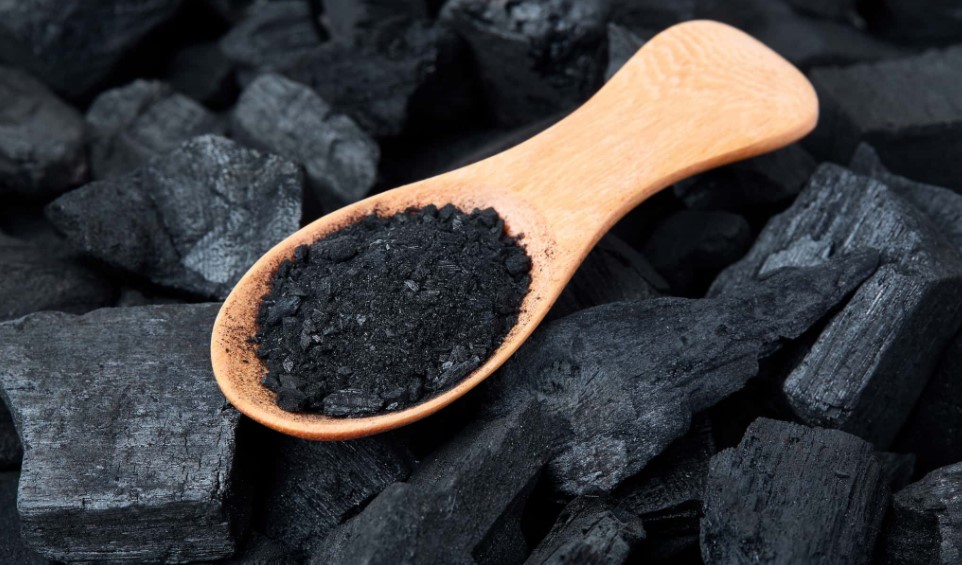
Quick Answer: You can make plain charcoal at home, outdoors, but you cannot properly activate it with household equipment. Commercial activation heats charcoal to low red heat in superheated steam to clear its pores. Soaking charcoal in calcium chloride and drying it in the sun or an oven, as many DIY guides suggest, does not do that. For odor control, store-bought activated charcoal is safer and works better.
This is not the answer most DIY guides give, so here is the reasoning, the safety problems with the usual method, and what a homemade charcoal odor absorber can realistically do. If you just want to know whether charcoal works on smells at all, start with our guide to how charcoal absorbs odors.
Can you make activated charcoal at home?
Not in any meaningful sense. The UN Food and Agriculture Organization's manual Simple Technologies for Charcoal Making (FAO Forestry Paper 41, 1987) explains that ordinary wood charcoal "is not a very active adsorption material for either liquids or vapours because its fine structure is blocked by tarry residues." To activate it, that structure has to be opened by removing the tars. The most widely used method, FAO says, is heating powdered charcoal in a furnace to low red heat in an atmosphere of superheated steam. The EPA's guide to granular activated carbon (EPA-542-F-21-010, 2021) likewise describes activated carbon as carbon-rich material "heated to 'activate' the surface."
A metal tin over a backyard fire, a kitchen oven or a sunny tray does not supply that furnace heat or the steam. What you end up with is ordinary charcoal.
| Step | Commercial activated carbon | Typical DIY method |
|---|---|---|
| Make charcoal | Controlled kiln or retort | Shells or wood burned in a covered tin outdoors |
| Activate | Furnace at low red heat with superheated steam | Soak in calcium chloride solution |
| Finish | Cooled in closed containers, graded and tested | Dried in the sun or a home oven |
| Result | Open pore structure, tested adsorption | Plain charcoal of unknown quality |
What does the calcium chloride soak actually do?
We could not find reliable evidence that it activates charcoal at home. Calcium chloride is a drying agent. PubChem, the US National Library of Medicine's chemical database, lists its uses as a desiccant and a pavement de-icer. Soaking finished charcoal in it and then drying it at sun or oven temperatures does not include the high-temperature step that FAO describes. It does add a chemical to handle. PubChem also lists calcium chloride as causing serious eye irritation, so wear goggles and gloves if you use it for anything.
Some guides suggest zinc chloride instead. Do not use it at home. PubChem lists zinc chloride as causing severe skin burns and eye damage, harmful if swallowed, and very toxic to aquatic life, so it should not go down a drain or into household trash either.
Is it safe to make charcoal at home?
Only outdoors, and only with care. Making charcoal produces carbon monoxide. FAO's safety section says the gas from carbonization "has a high content of carbon monoxide which is poisonous when breathed," and that hot charcoal can catch fire again when the container is opened, releasing more. The EPA describes carbon monoxide as an odorless, colorless and toxic gas. FAO also warns that the tars and smoke may harm the respiratory system over time and that the tars irritate skin.
If you go ahead:
- Never do it indoors, in a garage, a shed, or near open windows, doors or vents.
- Check your local burn rules and air quality first. Many areas restrict open burning.
- Keep a fire extinguisher or hose ready, and keep children and pets away.
- Let the sealed container cool completely before you open it, so the charcoal does not reignite.
- Wear a dust mask and gloves when you crush the charcoal. The dust is fine and messy.
- If anyone gets a headache, dizziness or nausea near the fire, move everyone away and call 911.
What should you burn, and what should you never burn?
Clean, dry material only. FAO notes that charcoal for adsorbing gases is usually made from coconut shell, and that dense, sound hardwood makes good charcoal. The EPA's Burn Wise guidance (updated 3 November 2025) lists materials that can release toxic or harmful chemicals when burned.
| Use | Never use |
|---|---|
| Dry coconut shells | Painted, coated or pressure-treated wood |
| Dry, untreated hardwood offcuts | Plywood, particle board or any wood with glue in it |
| Dry bamboo that has not been treated or varnished | Ocean driftwood, wet, rotted or moldy wood |
| Plastic, cardboard, trash or anything with colored ink |
Do not start the fire with gasoline, kerosene or charcoal starter fluid. The Burn Wise page says to use newspaper, dry kindling or all-natural fire starters.
Will homemade charcoal still help with odors?
A little, in a small space. Plain charcoal has some surface for odor molecules to stick to, but far less than activated carbon. Put it in a breathable cloth bag inside a closet, shoe, drawer or fridge, and replace it when the smell returns. In an open room it will do very little.
If the smell is musty, charcoal of any kind is the wrong tool. Musty odors come from moisture and mold, and our guide to activated charcoal and mold explains why the moisture has to be fixed first.
Is store-bought activated charcoal a better choice?
For odors, yes. A commercial product has actually been activated, and you skip the fire, smoke and chemicals. Look for "activated" on the label, since some bamboo charcoal bags are not. Coconut shell carbon is the common choice for odors. Buy enough to matter: the EPA's air cleaner guide (updated 1 October 2026) says carbon filters work when there is a large amount of material. Our roundup of activated charcoal odor eliminators compares options.
Frequently asked questions
How do you make activated charcoal at home?
You can make plain charcoal outdoors in a covered metal container, but true activation needs furnace heat and superheated steam. Home soaking and drying methods do not provide that, so the result is ordinary charcoal.
Does calcium chloride activate charcoal?
We found no reliable evidence that soaking charcoal in calcium chloride and drying it at home activates it. The commercial process relies on very high heat with steam. Calcium chloride is also an eye irritant, so handle it with goggles and gloves.
Can I activate charcoal in my oven?
No. A home oven does not reach the temperatures FAO describes for activation, and it does not supply steam. Do not bake chemically soaked charcoal in a kitchen oven.
Can I use barbecue charcoal as an odor absorber?
Not grill briquettes. They are a fuel, made from charcoal fines held together with binders. Buy activated charcoal sold for odor control instead.
Is making charcoal at home dangerous?
It can be. Carbonization gives off carbon monoxide, smoke and tars, and hot charcoal can reignite when exposed to air. Do it outdoors only, away from buildings, and follow local burn rules.
Is homemade charcoal cheaper than buying it?
Rarely, once you count the fuel, the time and the safety gear, and the homemade version is not activated. For odor control, a bag of activated coconut shell charcoal is the simpler choice.
Comments